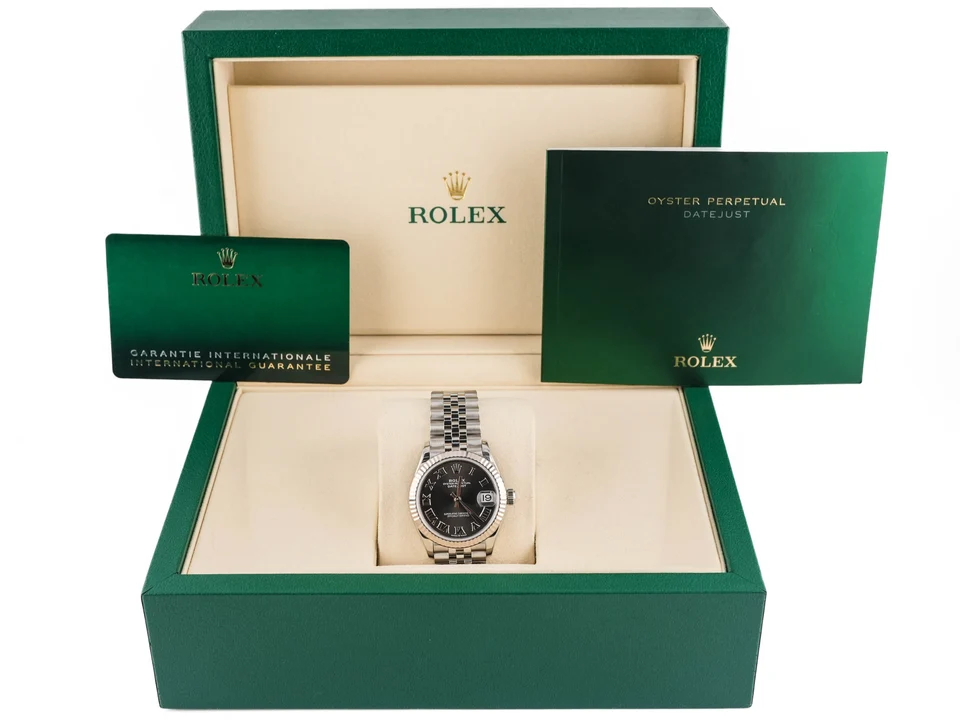
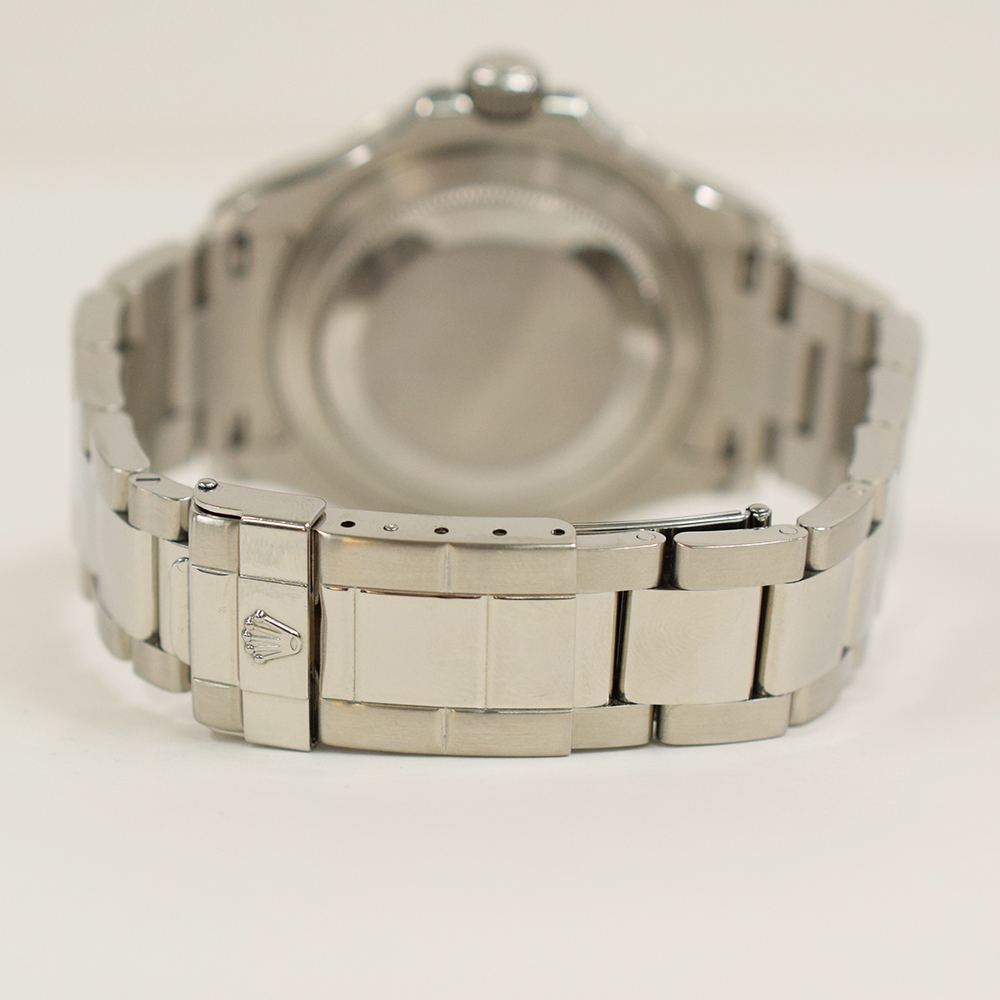
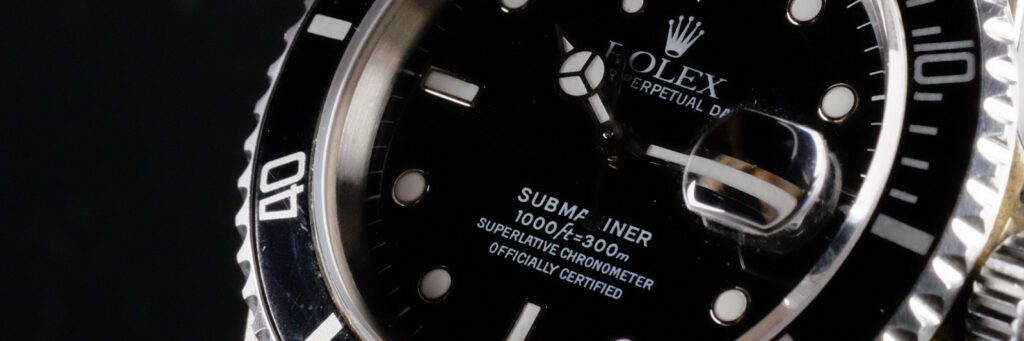
The Rolex Submariner is the most recognized luxury dive watch in history. It sits at the intersection of rugged instrument and aspirational status symbol—a tool watch that became a classic. Whether you’re buying your first Submariner or your fifth, the landscape of references, nicknames, market movements, and technical variations can be overwhelming.
Vintage 5513s command cult-like followings. Green dial Hulks disappeared from authorized dealers in 2020. Vintage Kermits with tropical dials fetch six figures. The current Starbucks ceramic model sells out months in advance.
This guide cuts through the noise. We’ll walk you through seven decades of Submariner production, explain every major reference, decode the collector nicknames, and show you exactly what to look for before you commit to a purchase.
The Submariner isn’t just popular because Rolex marketed it well—though they certainly did. It earned its reputation. It’s a watch that works at 1,000 feet, keeps time like a chronometer, and looks equally at home in a boardroom or on a beach. That durability and adaptability have made it the default answer to ‘what should my first Rolex be?’ For decades.
Seven Decades of the Submariner
The Submariner arrived in 1953, at a time when diving was transitioning from a military necessity to a civilian sport. Most watches of the era were water-resistant only by accident. Rolex built the Submariner to actually work underwater.
The early 6204 and the military 6536 and 6538 models (‘Big Crown’ James Bond references) set the blueprint: rotating bezel for decompression timing, screw-down crown for genuine water sealing, dial markings optimized for visibility in low light. The watch worked.
If you want the full history of how the Submariner became an icon, our complete Submariner history covers the story in detail.
The lineups that followed—the long-running 5513 and 5512 of the 1960s and 1970s, the 1680, which added a date window, the 16610 with sapphire crystal—were each iterative improvements on the core design. Rolex refined rather than revolutionized.
The 2008 arrival of ceramic bezels was the first major aesthetic shift in decades. The 2020 ceramic movement upgrade (3230/3235 caliber) and switch to the 126610 reference marked the most significant technical leap in modern memory.
What matters for buyers: the Submariner’s durability and standardization made it the default trade-up watch for generations. Almost everyone who owns one thinks it’s a rational decision, which is exactly what Rolex intended.
Every Major Submariner Reference
Reference numbers are Rolex’s way of cataloging production variants. Each reference number typically covers a specific production window and a defined set of specifications. Understanding references is the foundation of smart buying.
Vintage Era 1953 to 1989
The earliest Submariner references are now museum pieces or five- and six-figure collectors’ items. The 6204 (1953–1954), the 6536 and 6538 (1954–1959), and the 6662 are the holy grail. Most buyers won’t touch these without significant financial commitment and expertise.
The real entry point for vintage buyers is the reference 5512 (1958–1962, 4 lines) and 5513 (1962–1989, 3 lines and the serial number on the dial). These are the ‘affordable’ vintage Subs. ‘Affordable’ is relative: a good 5513 runs $8,000 to $15,000 depending on dial condition and service history.
A tropical dial (faded from black to brown) or gilt dial can push past $20,000. Avoid refinished dials at any price—they destroy value, and watch values in this segment are driven entirely by originality.
The 1680 (1967–1980) was the first Submariner with a date window. It’s slightly larger and more valuable than contemporary 5513s. Red text variants (‘Red Submariner’) are particularly sought after. The 16610 (1989–2010) brought a sapphire crystal and an aluminum bezel that patina beautifully over time. The 16610LV (2003–2010, 50th anniversary Kermit) added a green bezel to a black dial—it’s a no-longer-in-production reference that commands a premium.
Transitional Era 1989 to 2010
The no-date 14060 (1990–2006) and 14060M (2006–2010) served purists who wanted the symmetrical dial and simpler operation. They’re 5% less common than date models but priced identically on the pre-owned market. If you want a no-date Sub without paying 2026 prices, a 16610-era model is a smart choice.
The 16610 remained in production for 21 years. This long run means inventory is reliable and parts are compatible across much of the range. Service costs for these references are standardized and well-documented.
Modern Ceramic Era 2010 to Present
The 116610LN (black dial, 2010–2020) and 116610LV ‘Hulk’ (green dial and green ceramic bezel, 2010–2020) revolutionized the Submariner. Ceramic bezels don’t fade or scratch like aluminum. The 3135 movement is bulletproof. These became the investment-grade Subs—exactly because they stopped production, and demand didn’t follow.
The Hulk disappeared in 2020, and the secondary market immediately spiked. A $10,800 retail Hulk now costs $17,000 to $22,000, depending on age and condition. The Kermit (16610LV) is even scarcer: a 2008–2010 example runs $20,000-$30,000. These are no longer sport watches—they’re collectible.
Current production (as of Q1 2026): the 126610LN (black dial) and 126610LV ‘Starbucks’ (black dial with green bezel) replaced the 116610 family in 2020. The 124060 (no-date, ceramic, current) gives you the modern watch without the date complication. The 126613LB two-tone ‘Bluesy’ and white gold 116619LB ‘Smurf’ are metal variations with different price tiers.
| Reference | Years | Bezel | Date | Nickname | Movement |
| 6204 | 1953–54 | Fixed | No | First Sub | Cal. 1520 |
| 6536 / 6538 | 1954–59 | Rotating | No | Big Crown Bond | Cal. 1570 |
| 5512 / 5513 | 1958–89 | Rotating | No | Classic Vintage | Cal. 1520–1530 |
| 1680 | 1967–80 | Rotating | Yes | Red Sub | Cal. 1575 |
| 16610 | 1989–10 | Aluminum | Yes | Sapphire Sub | Cal. 3135 |
| 16610LV | 2003–10 | Green Alum | Yes | Kermit | Cal. 3135 |
| 14060 / 14060M | 1990–10 | Aluminum | No | No-Date | Cal. 3000–3110 |
| 116610LN | 2010–20 | Ceramic | Yes | Black Sub | Cal. 3135 |
| 116610LV | 2010–20 | Green Ceramic | Yes | Hulk | Cal. 3135 |
| 124060 | 2020–current | Ceramic | No | Current No-Date | Cal. 3230 |
| 126610LN | 2020–current | Ceramic | Yes | Current Black | Cal. 3235 |
| 126610LV | 2020–current | Green Ceramic | Yes | Starbucks | Cal. 3235 |
Understanding the Nicknames
Watch collectors are not subtle about naming watches. Nicknames stick when they capture something memorable about the watch — usually the dial and bezel combination. These names matter because they drive search behavior, resale pricing, and collector sentiment.
The Hulk
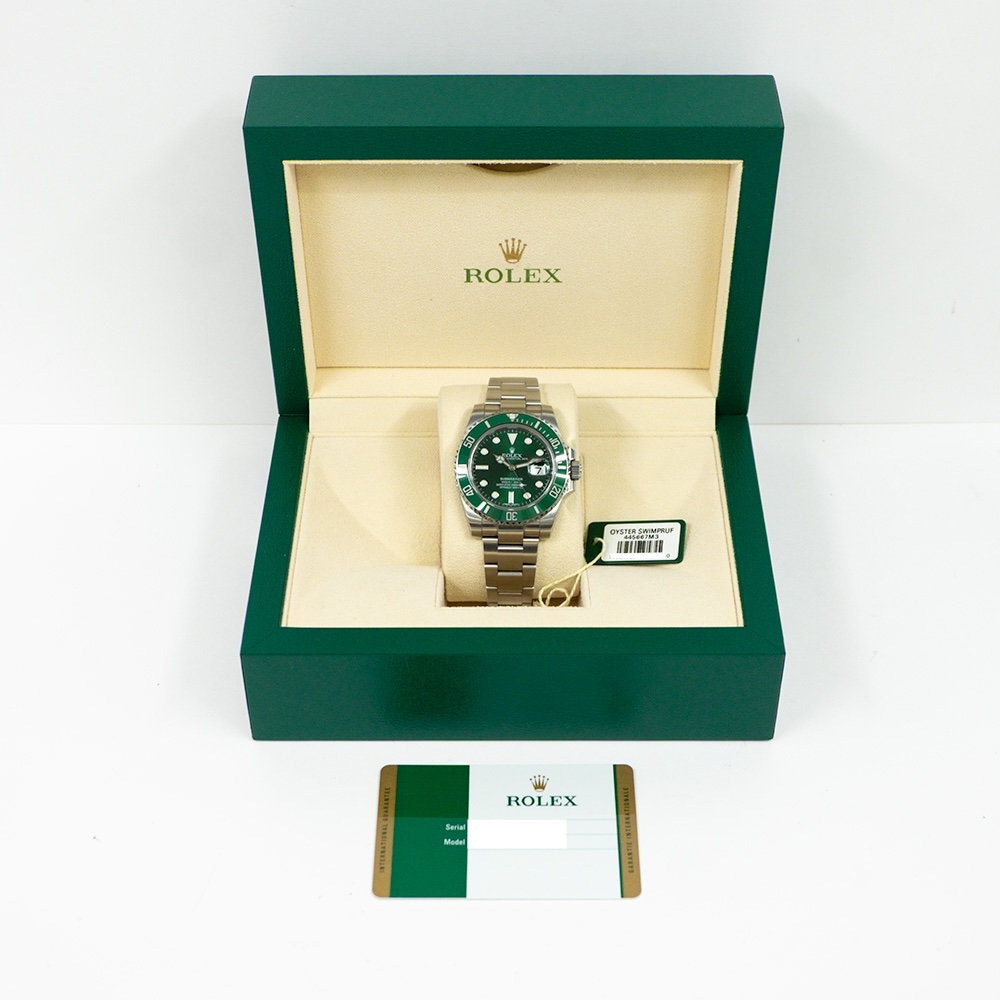
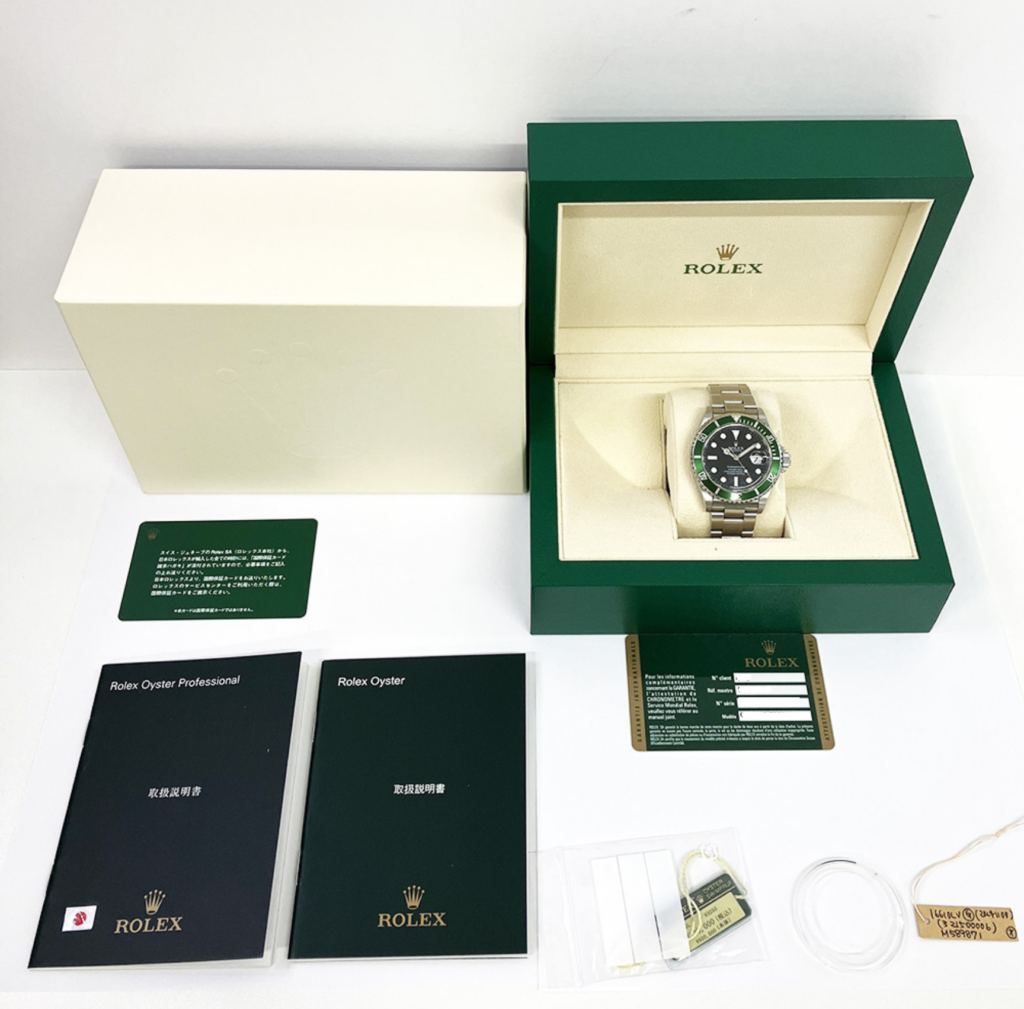
The 116610LV (2010–2020) earned its name for obvious reasons: a green dial, a green ceramic bezel, and an unmistakable presence. It’s simultaneously the most desired and most “showy” modern Submariner, currently trading between $18,000 and $22,000 depending on age and condition. Rolex discontinued it specifically because they couldn’t meet demand. That scarcity now drives the premium.
The Kermit
Before the Hulk went full green, the 16610LV (2003–2010) paired a black dial with a green aluminum bezel — a more understated take that collectors named after a different green icon. Kermits are rarer than Hulks because fewer were produced, and pricing reflects it: $20,000 to $30,000 for clean examples. If you’re buying vintage green Subs, this is the reference to find.
The Starbucks
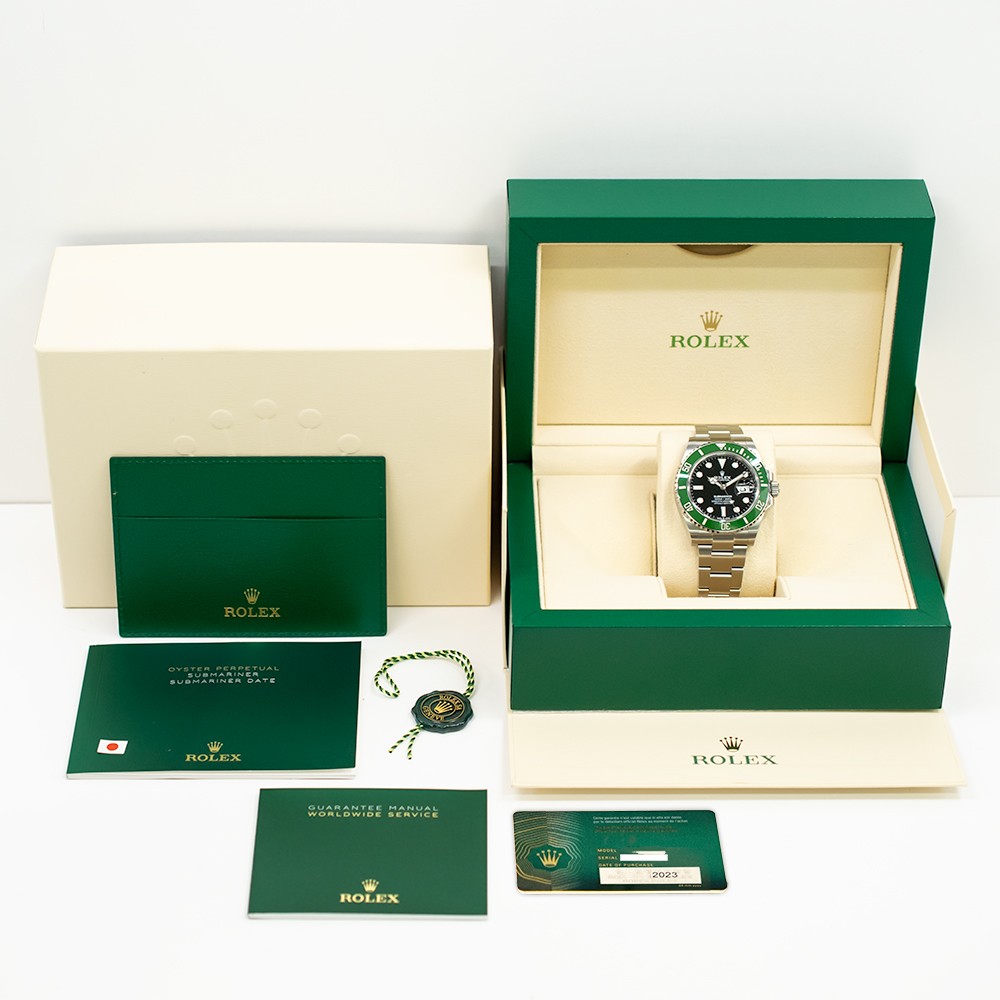
The current production 126610LV (2020–present) reverted to a black dial with green ceramic bezel, and the nickname trades on the green-and-white similarity to a certain coffee logo. Retail is $7,400. On the secondary market, a 2021 or 2022 model runs $9,500 to $11,500, depending on condition. The premium is smaller than the Hulk or Kermit because production is ongoing.
The Smurf
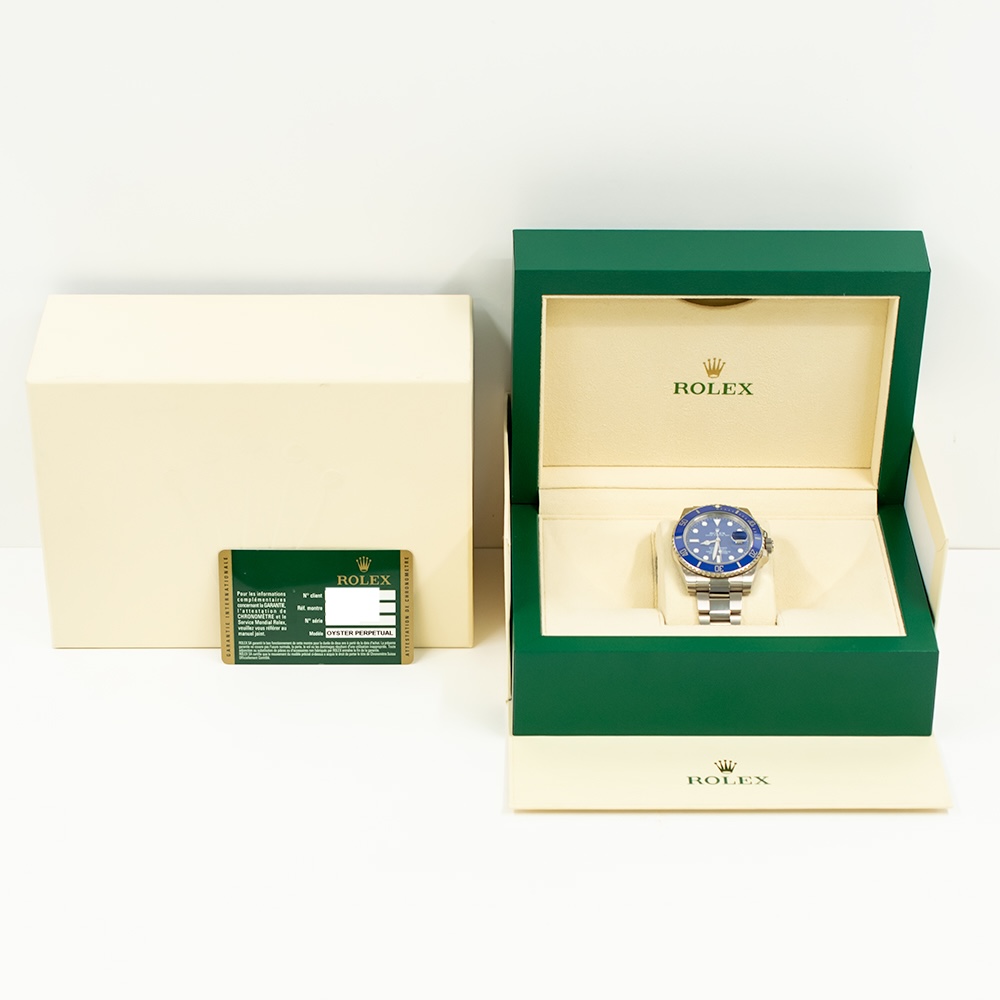
The 116619LB is an entirely different animal — white gold with a blue dial and blue bezel. Smurfs are $35,000+ at retail and $45,000+ pre-owned. They’re rare because the target buyer is someone who already owns five Rolex watches and can justify the cost of white gold. Collectors treat them as alternate-universe Subs.
The Bluesy
The 126613LB in two-tone (stainless and 18K yellow gold) with a blue dial and blue bezel sits between steel and precious metal in the collector hierarchy. Clean current production models trade between $20,000 and $25,000 — less sought than white gold Smurfs, more collectible than steel blacks.
These nicknames appear on collector forums, Chrono24 listings, and in secondary-market pricing. When you search for “Hulk” or “Kermit,” you’ll find thousands of conversations. The names compress information: everyone knows what you mean. It affects resale velocity and pricing because serious buyers search by nickname.
Date vs. No-Date
The choice between a date window (5513/16610/116610LN) and no-date (5512/14060/124060) is partly practical, partly aesthetic, and entirely personal. Both are legitimate Submariner choices.
The Case for No Date
The no-date Submariner offers a perfectly symmetrical dial. The Mercedes hands, indices, and Submariner text form a balanced composition with nothing to interrupt it. Your eye goes straight to the time without a secondary reference point. Watchmaking purists argue that a date complication on a dive watch is an affectation — if you’re 150 feet underwater, the date is irrelevant.
Contemporary no-date Subs (124060) start at $6,100, and pre-owned references like the 14060M trade in the $8,000 to $12,000 range. Demand is lower, but supply is equally limited, so pricing remains comparable to that of dated models.
The Case for a Date Window
For a daily wearer, seeing both the time and the date on your wrist is a non-negotiable feature. The Cyclops lens is an iconic Rolex design and standard across the entire sports line — GMT, Daytona, Yacht-Master. Most Submariner inventory on the secondary market is date models because they historically outsold no-date versions roughly 5:1. Current production 126610LN retails at $7,650.
Which One to Pick
The price difference between the two is negligible, and collector preference splits right down the middle. If you check the date on your watch daily, get a date model. If you check your phone for the date and prefer cleaner aesthetics, go no-date. Both hold value and have full-service parts availability. The Submariner is designed well enough that there’s no wrong answer here.
Movements Through the Years
A Rolex movement is a compact ecosystem. Parts are expensive. Service intervals are defined by Rolex. Understanding which movements your watch uses tells you exactly what service costs to expect.
Cal. 1520 / 1530 (Vintage): These movements powered the earliest Submarines. The 1520 was hand-wound. The 1530 added an automatic rotor. Both are now service items—parts are scarce, and service costs are high ($1,500–$3,000 for a full overhaul). Vintage movement watches are not daily wearers in 2026. They’re collection pieces or restoration projects.
Cal. 3035 / 3135 (Modern Workhorses): The 3035 powered 1980s Subs. The 3135 was introduced in 1988 and remained in production until 2020. It’s the most common Rolex movement ever made. Parts are cheap. Every watchmaker in the world knows how to service it. Routine maintenance (gasket seals, cleaning) runs $400–$600. A full overhaul costs $1,000–$1,500. If you own a 16610 or 116610LN, you have a 3135. It will run forever.
Cal. 3230/3235 (Current): Introduced in 2020, the 3230 (no date) and 3235 (date) represent the biggest movement upgrade Rolex has made in decades. 70-hour power reserve instead of 48. Better chronometer rating. Improved shock resistance. New blue Parachrom hairspring.
Rolex claims lower maintenance intervals. Service costs are projected at $1,200–$1,600 because the movement is new and Rolex is still establishing rates. In ten years, when supply stabilizes, expect it to match the 3135 pricing.
What matters: older movements need more frequent service. A 3135 is mature technology with known service costs. A 3230 is still unproven in the field. If you’re buying a daily wearer and the cost of ownership matters, a 116610 with a 3135 gives you predictability. If you want the latest technology, the 126610 with a 3235 is the rational forward choice.
Pre-Owned Pricing Across Generations
Submariner pricing in Q1 2026 reflects scarcity, desirability, and condition. These are approximate ranges. Individual watches vary based on service history, box/papers, and cosmetic condition.
| Reference | Era | Typical Range | Notes |
| 5513 | Vintage | $8,000–$18,000 | Depends heavily on dial condition. Tropical commands premium. |
| 1680 | Vintage | $12,000–$25,000 | Red text versions higher. Service history crucial. |
| 16610 | Transitional | $8,000–$12,000 | Sapphire crystal. Aluminum bezel. Reliable movement. |
| 16610LV | Transitional | $20,000–$30,000 | Kermit. Rarer than later green models. |
| 14060M | Transitional | $8,000–$11,000 | No-date. Identical market to 16610 date models. |
| 116610LN | Modern Ceramic | $12,000–$16,000 | Black. Discontinued 2020. Ceramic bezel. 3135 movement. |
| 116610LV | Modern Ceramic | $18,000–$23,000 | Hulk. Discontinued 2020. Scarcity premium. |
| 124060 | Current | $7,500–$9,500 | No-date. Current production. 3230 movement. |
| 126610LN | Current | $8,500–$11,000 | Black current production. 3235 movement. |
| 126610LV | Current | $9,500–$12,000 | Starbucks current production. 3235. Green ceramic. |
Discontinued models carry premiums because production ended and demand remains strong. The Hulk commands the largest premium: over 100% above retail. The Kermit is even scarcer.
Current-production watches depreciate toward their secondary-market equilibrium ($500–$1,500 below retail) within the first year, then stabilize. If you’re buying for long-term ownership, avoid chasing discontinued models at peak pricing.
What to Check Before You Buy
The difference between a $10,000 and $15,000 Submariner often comes down to details most people miss. Here’s the checklist.
Serial number matching
Open the caseback. Is the serial engraved on the case? Compare it to the dial (5513s have the number at 6 o’clock) and to your watch certificate. Mismatches are red flags for replacement parts or case swaps. Original case = original watch. Replacement case = reduced value and authenticity questions.
Service history
Ask for records. A Submariner serviced every 5–7 years by Rolex is worth more than an identical watch with unknown service history. Service papers (even from independent watchmakers) add 5–10% to value. A never-serviced vintage watch is a lottery ticket—it might run perfectly, or it might be seized up.
Bezel condition
Aluminum bezels (5513, 16610, etc.) naturally fade and scratch. Light patina is character. Deep scratches and lifted lume markers reduce appeal. Ceramic bezels (116610+, 126610+) don’t fade but do scratch. Minor scratches are cosmetic. Deep gouges suggest rough use or polishing.
Bracelet stretch
The links on vintage bracelets wear and develop side-to-side play. A tiny amount is acceptable. Visible gaps between links after a few years is normal wear. Extreme stretch suggests imminent bracelet replacement ($400–$800 for Rolex OEM). Factor this into pricing if you’re buying a 5513 or 16610 with the original bracelet.
Dial originality
A refinished dial is a red flag for any vintage Submariner. Refinished means someone sanded off the original finish and re-applied lume and printing.
It looks newer, but it’s fundamentally different. Collectors avoid refinished examples even if the work looks excellent. Original dial = $3,000–$8,000 premium depending on reference and condition. Refinished can drop value by 25–40%.
Box and papers
A complete set (watch, box, papers, warranty card, links) adds 10–15% to value. Papers alone add 5–8%. A watch without papers is still authentic but less liquid.
If you’re buying vintage, papers are rare enough that you shouldn’t expect them. Modern references (116610+) often come with boxes and papers. That original ephemera has become a value multiplier.
When you’re looking at a specific watch, these details separate a smart purchase from an accidental money sink. A $13,000 Submariner without service history might be worth $10,000 in functional terms. A $12,000 Submariner with complete service records and original packaging might actually be the better buy.
The Submariner vs. Everything Else
The Submariner isn’t alone in Rolex’s sports watch lineup. The positioning question is real: why a Sub instead of a Sea-Dweller, GMT, or Daytona?
Submariner vs. Sea-Dweller: The Sea-Dweller is a deeper-diving, more specialized version of the Sub. Helium escape valve. Rated to 4,000 feet instead of 300. Bezel identical in layout. Dial slightly larger. More expensive ($12,000+). If you’re buying a dive watch and you don’t actually dive, the Sea-Dweller is over-specification. Our complete Sea-Dweller vs. Submariner guide compares the two head-to-head.
Submariner vs. GMT-Master II: The GMT is a pilot’s watch with a second timezone complication. Different handset. Different dial layout. If you fly internationally or track multiple time zones, the GMT is functional. If you just want a classic sports watch that works anywhere, the Sub is simpler. Both are iconic. Both hold value. Different tools for different lives.
Submariner vs. Daytona: The Daytona is the racing chronograph. Tachymeter bezel. Subdials for timing. Serious complication. Rolex’s most ‘show’ sports watch. The Submariner is the most ‘go’ sports watch. Submariner is also $2,000–$3,000 cheaper at retail and significantly easier to find on the secondary market. Daytona is the dress-up watch. Sub is the dress-down watch.
Practical answer: the Submariner is still the default ‘if you could own only one Rolex sports watch’ recommendation. It works in board meetings, at the beach, on expeditions, and in everyday life. It doesn’t announce itself. That restraint is exactly why it stays relevant.
Why Buy Your Submariner from WPB Watch Co
We authenticate every Submariner in our inventory through visual inspection, weight analysis, movement timing, and pressure testing. Counterfeit Rolex watches exist—we make sure you don’t buy one.
Rotating inventory means we stock different references at different times. If you’re hunting a specific reference, our Submariner collection updates weekly with new arrivals.
Full transparency: we list serial numbers, service history, cosmetic condition, and movement caliber for every watch. No surprises on arrival. If you buy it, you know exactly what you’re getting.
Not ready to commit? Our sell or trade program lets you upgrade later. That’s why many collectors start with us and return every few years as their watches evolve.