The Rolex Daytona is the most recognizable chronograph ever made. Rolex built it in 1963 for racing drivers, named it after the Daytona International Speedway, and spent the next six decades turning it into one of the hardest watches in the world to buy at retail. For a pre-owned buyer, that demand is good news: the secondary market is where nearly every Daytona actually changes hands.
This guide covers the three movement eras, the reference numbers that matter, what each tends to cost on the pre-owned market in 2026, and what to inspect before you buy. WPB Watch Co. handles Daytonas across all of these eras, from vintage hand-wound references to the current ceramic-bezel model.
The Three Eras of the Daytona
Almost everything about buying a Daytona comes back to which movement is inside it. There are three eras, and they price very differently.
Hand-Wound Era (1963–1988)
The earliest Daytonas used a manually wound chronograph based on the Valjoux 72, later the higher-beat Valjoux 727. References like the 6263 and 6265 define this era, along with the rare “exotic” dials now known as Paul Newman dials. Rarity, dial originality, and condition drive value here more than anything else, and the best examples sit well into six figures. Standard-dial hand-wound references start lower but are still firmly collector territory.
Zenith Era (1988–2000)
In 1988 Rolex gave the Daytona its first automatic movement, the Caliber 4030, built on the Zenith El Primero. Rolex modified it heavily, and one common myth is worth correcting: rather than run it at the El Primero’s native 36,000 vph, Rolex slowed it to 28,800 vph for durability. The core steel reference is the 16520, with the two-tone 16523 and yellow gold 16528 alongside it. Zenith Daytonas are the sweet spot for buyers who want vintage character with automatic convenience, and dial variations (four-liner, inverted six, patrizzi) can swing prices significantly.
In-House Era (2000–Present)
In 2000 Rolex replaced the Zenith base with its own Caliber 4130, a fully in-house chronograph with a 72-hour power reserve and a simpler, more serviceable design. The steel 116520 (metal bezel) ran until 2016, when the 116500LN brought the black Cerachrom ceramic bezel and a choice of white or black dial. In 2023 the current 126500LN arrived with an updated case, bracelet, and the new Caliber 4131. This is the era most buyers shop, and even the current steel model typically trades well above its retail price.
Key Daytona Reference Numbers
| Reference | Era | Movement | Notable features |
|---|---|---|---|
| 6263 / 6265 | Hand-wound (1971–1988) | Valjoux 727 | Screw-down pushers; “Paul Newman” exotic dials |
| 16520 | Zenith (1988–2000) | Cal. 4030 (Zenith base) | First automatic Daytona; steel |
| 16523 | Zenith (1988–2000) | Cal. 4030 | Two-tone steel and yellow gold |
| 16528 | Zenith (1988–2000) | Cal. 4030 | Yellow gold |
| 116520 | In-house (2000–2016) | Cal. 4130 | Steel, metal bezel; last non-ceramic steel Daytona |
| 116503 | In-house (2000s–2023) | Cal. 4130 | Two-tone steel and yellow gold |
| 116500LN | In-house (2016–2023) | Cal. 4130 | Ceramic bezel; white or black dial |
| 126500LN | In-house (2023–present) | Cal. 4131 | Current steel model; updated case and bracelet |
| 116508 | In-house (2016–present) | Cal. 4130 | Yellow gold; green-dial version linked to John Mayer |
| 126529LN | In-house (2023) | Cal. 4131 | White gold Le Mans centenary; 24-hour subdial |
The Two-Tone Daytona (116503 and 16523)
Two-tone Daytonas pair steel with yellow gold and sit below the solid-gold models while still wearing dressier than the all-steel version. The modern 116503 (and its current successor, the 126503) is the reference most buyers mean by “two-tone Daytona,” with the vintage 16523 offering the same look with Zenith-era character. Both are a practical entry point into gold Daytona ownership without full precious-metal pricing.
The Le Mans Daytona (126529LN)
Rolex marked the 100th anniversary of the 24 Hours of Le Mans in 2023 with the 126529LN, an 18k white gold Daytona with a black ceramic bezel and a dial that swaps the usual running-seconds subdial for a red 24-hour scale, a nod to endurance racing. It is a limited, allocation-only release that commands a strong premium over retail on the secondary market. For a closer look, see our Le Mans 100th Anniversary Daytona feature.
The John Mayer Daytona (116508)
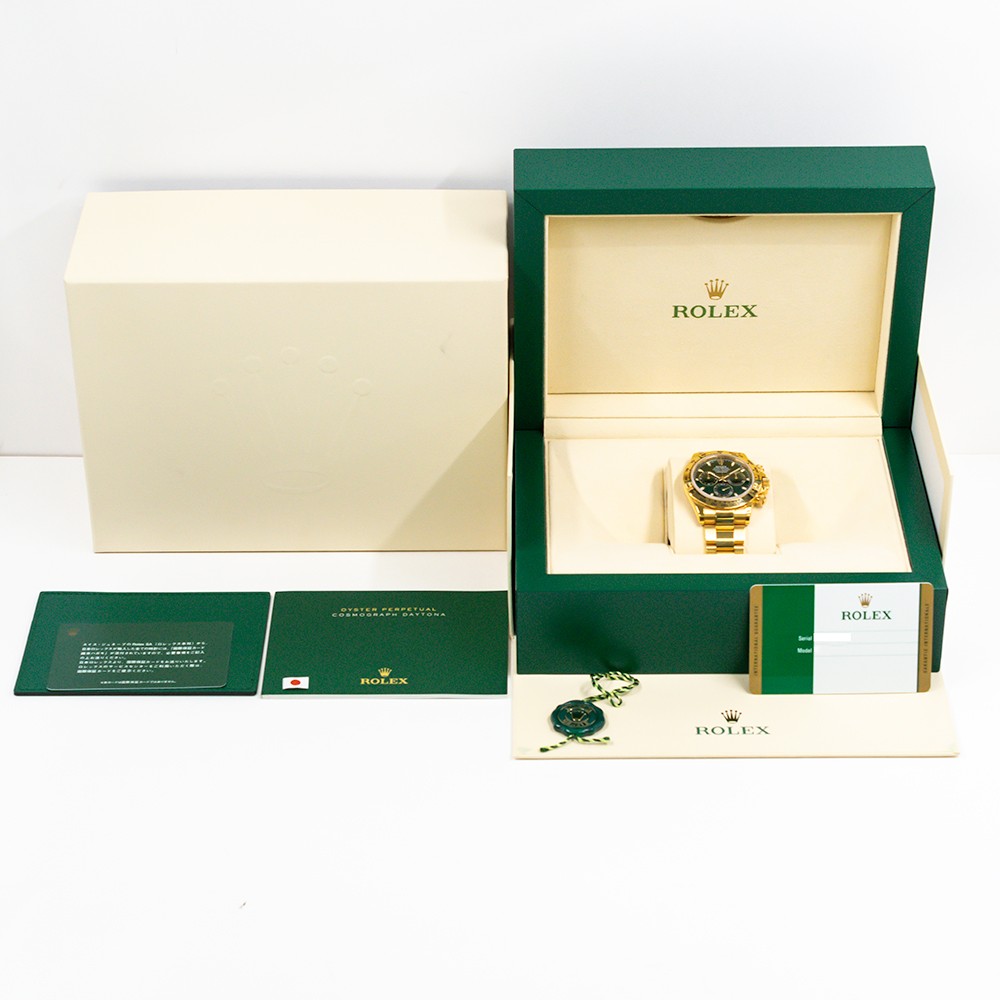
The 116508 is the yellow gold Daytona, and its green-dial configuration became famous after musician and collector John Mayer praised it publicly. Discontinued and now sought-after, the green-dial 116508 pairs a warm gold case with a dial color few other Daytonas offer, which is exactly why it trades at a premium. Our dedicated John Mayer Daytona 116508 guide covers the reference in detail.
Rolex Daytona Price Ranges (2026)
The Daytona market moves quickly, and precious-metal and vintage pieces vary widely with condition and dial. Treat the figures below as approximate mid-2026 secondary-market ranges, not fixed quotes. For live pricing on any reference, check current inventory or ask us for a quote.
| Reference / type | Approx. pre-owned range (mid-2026) | Notes |
|---|---|---|
| Hand-wound 6263/6265 (exotic dial) | $150,000+ | Rarity and dial originality drive price |
| Zenith 16520 (steel) | $30,000–$55,000 | Dial variant matters; vintage sweet spot |
| Zenith 16523 (two-tone) | $18,000–$28,000 | Accessible gold-and-steel vintage |
| 116520 (steel, metal bezel) | $22,000–$30,000 | Last pre-ceramic steel Daytona |
| 116500LN (steel, ceramic) | $26,000–$34,000 | Strong demand; above retail |
| 126500LN (current steel) | Well above ~$16k retail | Allocation-only; commands a premium |
| 116503 (two-tone) | $18,000–$24,000 | Entry point to gold Daytona |
| 116508 (yellow gold, green “John Mayer”) | $55,000–$85,000+ | Discontinued; highly collectible |
What to Inspect When Buying a Used Daytona
- Dial originality: the dial should match the reference and production year. Faded printing or mismatched subdial tones are red flags, and originality is the single biggest driver of value on vintage pieces.
- Chronograph function: the pushers should feel firm and precise. Start, stop, and reset the chronograph; the seconds hand should snap cleanly back to zero with no hesitation.
- Case sharpness: over-polishing rounds off the lugs and thins the case. Look for crisp lug edges and defined bevels.
- Bezel: on ceramic-bezel models check for chips or cracks; on vintage aluminum or engraved bezels, confirm the markings are intact and legible.
- Service history: ask for records. A service within the last five years is reassuring on a used piece, both for accuracy and water resistance.
- Box, papers, and serial: matching documentation supports both authenticity and resale value. If you have any doubt, get the watch professionally authenticated before you buy.
Why Buy Your Daytona from WPB Watch Co.
Every watch we sell is inspected and authenticated in house, so you know exactly what you are getting. Our selection spans vintage hand-wound references to the current ceramic model, and we work with first-time buyers and seasoned collectors alike. Browse our Daytona inventory, or if you already own one, our sell and trade program makes it straightforward to move between pieces at a fair valuation.
Frequently Asked Questions
How much is a Rolex Daytona?
On the pre-owned market in 2026, a steel ceramic Daytona generally runs from the high $20,000s into the mid $30,000s, two-tone models sit lower, and vintage or precious-metal references climb into six figures. Prices move with condition, dial, and demand, so check current inventory for live figures.
Why is the Daytona so hard to buy at retail?
Demand far outstrips how many Rolex produces, so authorized dealers keep long waitlists and sell most steel models by allocation. That is why the majority of Daytonas trade on the pre-owned market, often above retail.
What’s the difference between the 116500LN and 126500LN?
The 116500LN (2016–2023) introduced the ceramic bezel and runs the Caliber 4130. The 126500LN (2023–present) is the current model, with a subtly updated case and bracelet and the newer Caliber 4131. Visually they are close; the 126500LN is the one still in production.
Is a Zenith Daytona better than an in-house one?
Neither is strictly better. The in-house Caliber 4130 is simpler to service and more modern, while the Zenith-based 16520 offers vintage appeal and a movement collectors prize. The Zenith era is the value sweet spot for many buyers; the in-house era is the easier daily wearer.
Does the Daytona hold its value?
The Daytona has historically been one of the strongest value-retaining watches Rolex makes, thanks to persistent demand and limited supply. As with any watch, no return is guaranteed, and condition and originality matter, but few references have a stronger track record.
You May Also Like