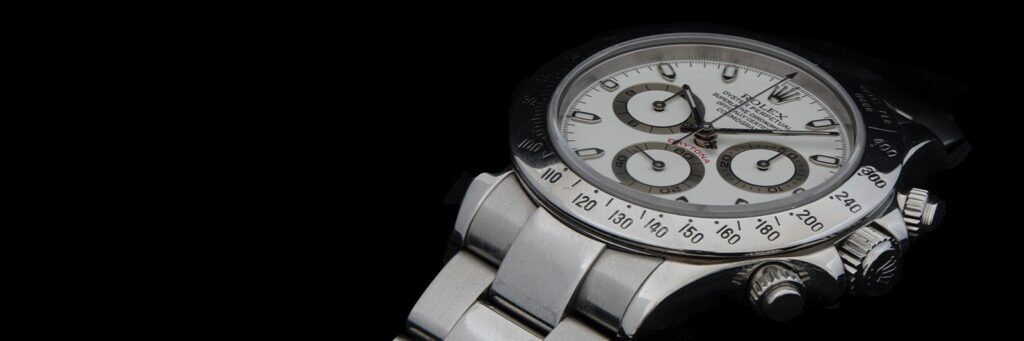

The Rolex Daytona stands as the most iconic chronograph in horological history. Designed for racing drivers and perfected over six decades, the Daytona has transcended its sport origins to become one of the most coveted watches in the world. Whether you’re seeking a vintage manual-wound reference or the modern in-house movement marvel, the Daytona offers something for every serious collector.
At WPB Watch Co, we specialize in pre-owned Daytonas spanning all eras and price points. This guide explores the evolution of the Daytona, highlights key reference numbers, and provides 2026 market pricing to help you make an informed purchase decision.
A Brief History of the Rolex Daytona
The Daytona was introduced in 1963 as a purpose-built chronograph for professional racing drivers. Named after the famous 24-hour race at Daytona International Speedway, the original reference featured a manual-wound movement and a controversial exotic dial. Over nearly 30 years, Rolex would use the legendary Valjoux movement—a benchmark for precision and reliability.
In 1988, a pivotal shift occurred when Rolex introduced the Zenith El Primero movement, a semi-integrated chronograph caliber that dramatically improved performance and reliability. This era, spanning until 2000, created some of the most sought-after vintage Daytonas today.
The introduction of the in-house Rolex Caliber 4130 in 2000 marked the final evolution. This fully integrated chronograph movement represented the culmination of decades of refinement and remains the standard in modern Daytonas.
The Three Eras of the Daytona
Hand-Wound Era (1963–1988)
The earliest Daytonas featured manually wound chronograph movements and are highly prized by vintage collectors. The iconic ‘exotic’ dial with contrasting subdials defines much of this era. References like the 6262 and 6263 showcase the raw mechanical elegance of Rolex’s pre-Zenith chronographs.
These watches demand premium prices due to rarity and historical significance, with prices ranging from $50,000 to over $150,000 depending on condition and dial originality.
Zenith Era (1988–2000)
The introduction of the Zenith El Primero movement revolutionized the Daytona. This semi-integrated movement beat faster (36,000 vph versus 28,800 vph) and offered superior chronograph precision.
The most famous reference from this era is the 16520, released in 1988, and its successors, like the 16570 and 16600. The 1990s Zenith Daytonas represent excellent value for collectors seeking vintage appeal with modern reliability. Prices typically range from $25,000 to $60,000.
In-House Era (2000–Present)
The Caliber 4130 movement represents Rolex’s crowning achievement in chronograph engineering. Fully integrated, COSC-certified, and with a 72-hour power reserve, the modern Daytona is the most refined version ever produced.
The reference 116520 (stainless) and 116505 (Everose) defined the era, with newer references like the 126500LN adding updated cases and aesthetics. Modern Daytonas command substantial prices—$15,000 to $20,000+, depending on material and market conditions.
Key Reference Numbers at a Glance
| Reference | Era | Movement | Notable Features |
| 6263 | Hand-Wound (1970–1988) | Valjoux 727 | Exotic dial, push-button chronograph |
| 16520 | Zenith (1988–2000) | Zenith El Primero | Steel, 36k vph, iconic reference |
| 116520 | In-House (2000–2010) | Caliber 4130 | Stainless, modern movement |
| 116500LN | In-House (2010–2020) | Caliber 4130 | Ceramic bezel, white dial |
| 126500LN | In-House (2020–Present) | Caliber 4130 | Updated case, modern production |
| 116508 | In-House (2010–Present) | Caliber 4130 | Yellow gold, John Mayer signature |
| 116505 | In-House (2010–Present) | Caliber 4130 | Everose gold, 72-hour power reserve |
| 116503 | In-House (2010–Present) | Caliber 4130 | Stainless with Oysterflex bracelet |
The Le Mans 100th Anniversary Edition (126529LN)
In 2023, Rolex celebrated the 100th anniversary of the 24 Hours of Le Mans with a limited-edition Daytona in yellow gold. The 126529LN features a unique design with a dial inspired by the race’s heritage and a special caseback. This watch represents the intersection of horological mastery and motorsport legacy.
For a deeper dive into this historic release, explore our Le Mans 100th Anniversary Edition article.
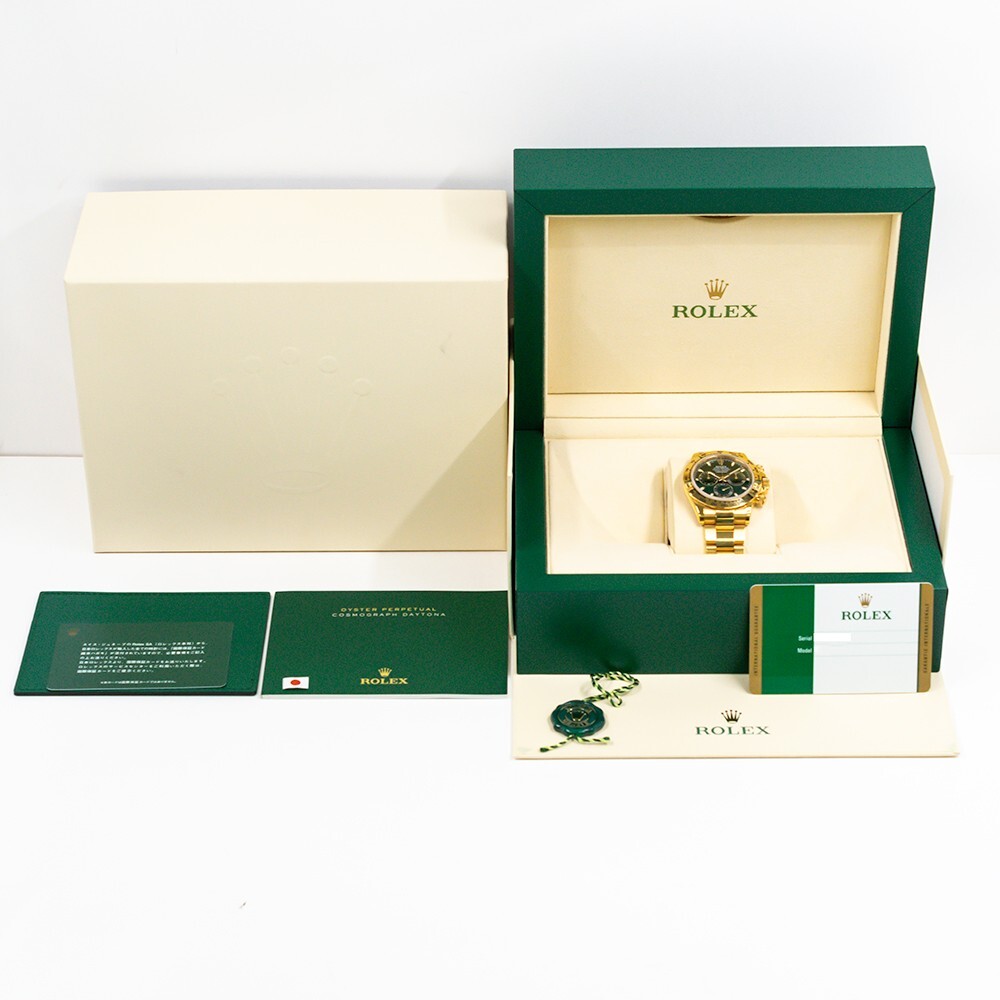
The John Mayer Signature Daytona (116508)
When musician and watch collector John Mayer collaborated with Rolex, the result was the 116508—a yellow gold Daytona with an exotic cream dial and contrasting subdials.
Released in 2010 and discontinued years later, this reference has become highly sought after. The 116508 combines classic aesthetics with modern movement, making it a bridge between vintage appeal and contemporary engineering.
Learn more about why collectors pursue this reference in our dedicated John Mayer Daytona 116508 guide.
Rolex Daytona Price Ranges (Q1 2026)
Market prices fluctuate based on condition, originality, and demand. Below is a snapshot of typical pricing for key references as of Q1 2026:
| Reference / Type | Average Price Range | Market Notes |
| Vintage 6263 (excellent condition) | $75,000–$150,000+ | Rare; exotic dial highly sought |
| Zenith 16520 (excellent condition) | $35,000–$55,000 | Sweet spot for vintage value |
| 116520 Stainless (2000–2010) | $18,000–$24,000 | Strong demand, good investment |
| 116500LN Stainless (ceramic bezel) | $16,000–$21,000 | Current production, readily available |
| 126500LN Stainless (current) | $14,500–$18,000 | Newest reference, modern case |
| 116508 Yellow Gold (John Mayer) | $45,000–$70,000 | Discontinued, highly collectible |
| 116505 Everose Gold | $30,000–$42,000 | Beautiful material, stable pricing |
| 116503 Stainless Oysterflex | $17,000–$22,000 | Modern rubber strap, popular variant |
What to Inspect When Buying a Used Daytona
- Dial Originality: Verify that the dial matches the reference number and production year. Faded printing or non-matching subdial colors are red flags. Original dials are critical to value preservation.
- Chronograph Pushers: Press the chronograph pusher—it should be responsive and smooth with no grinding or clicking sounds. Weak pushers indicate wear or potential service issues.
- Chronograph Function: Test the start/stop and reset functions. The chronograph hand should snap to zero without hesitation and advance smoothly during timing.
- Case Polishing: Excessive polishing can remove significant metal and disrupt the watch’s proportions. Look for sharp edges on the lugs—heavily polished cases have rounded, soft edges.
- Bezel Condition: For ceramic bezels, check for cracks or fading. For aluminum bezels on vintage pieces, verify the print is intact and legible.
- Service History: Ask for service records. Recent service (within 5 years) is preferable for used pieces to ensure reliability and water resistance.
Why Buy Your Daytona from WPB Watch Co
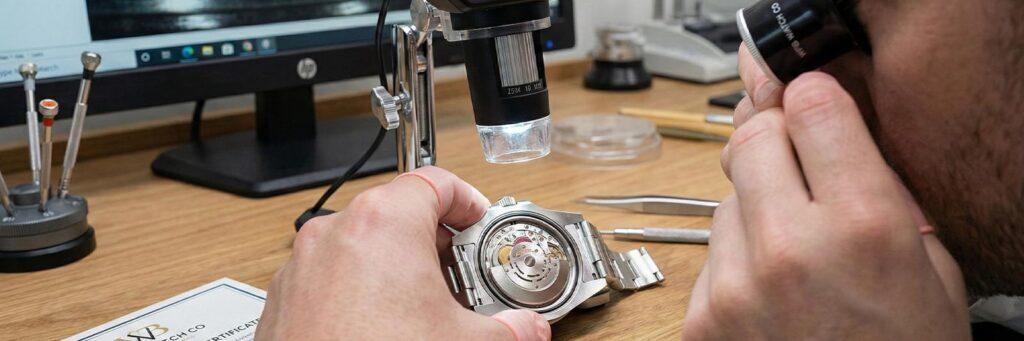
At WPB Watch Co, we understand the significance of your purchase. Every watch in our collection undergoes rigorous inspection and authentication. We specialize in professional watch authentication, ensuring you receive exactly what you’re paying for.
Our curated selection spans from rare vintage pieces to modern references. Whether you’re a first-time buyer or a seasoned collector, browse our complete Daytona inventory to find your next timepiece.
Ready to upgrade your collection? We also offer a seamless sell or trade program to help you transition between pieces with confidence and fair valuations.