Table of Contents
You reach for your favorite quartz watch only to find it has stopped. At first, you assume it simply needs a new battery. But once the case back opens, you discover something far worse. The battery has leaked, and corrosion has already begun to spread. This situation is more common than most people realize, and it often leads to repairs that cost far more than a simple battery swap. The good news is that most leaks are preventable when you know what early signs to look for.
Battery leaks are one of the most damaging problems quartz watches face. Mechanical watches rely on gears and springs. Quartz watches rely on batteries with limited lifespans. When these batteries fail, they don’t always stop quietly. Sometimes they release corrosive material that destroys circuit boards, eats through metal components, and ruins movements that should last for decades.
Knowing the early signs helps you act fast and protect your watch. It also saves you from expensive repairs or the loss of a timepiece you value. Whether you wear a luxury Swiss quartz model or a simple everyday watch, paying attention to warning signs can save you hundreds or even thousands of dollars.
Recognizing the Early Warning Signs of Watch Battery Leak
The clearest sign of a battery issue is when your watch stops running. Many people leave stopped quartz watches in drawers for months or years. This delay is exactly when leaks tend to occur. A dead battery sitting inside a closed case gives corrosion the perfect chance to spread. If your watch stops, never wait. A stopped quartz watch is already at risk.
Many movements give subtle clues before the battery dies. If your watch begins losing time, running slow by minutes per week, or behaving inconsistently, the battery may be close to failure. Some quartz watches have a built-in low-battery indicator. The second hand will jump every two or four seconds instead of once per second. This is the watch’s way of telling you to replace the battery soon.
You can’t see most signs without opening the case back, but severe leaks sometimes show externally. Look for any white, green, or blue-green residue along the case back seam. This is a sign that corrosion is spreading outward, and the watch needs immediate professional care.
Unusual odors can also be a red flag. Leaking batteries sometimes produce a sharp chemical smell. If you notice any odd odor when handling your watch, take action right away, even if the watch is still running.
Temperature sensitivity is another clue. A failing battery may cause a watch to run fine indoors but stop or behave unpredictably in hot or cold weather. These changes often mean the battery is deteriorating in a way that increases leak risk.
Understanding Why Battery Leaks Happen
Watch batteries don’t leak at random. Specific conditions cause the seal inside the battery to break down. Understanding these causes helps you prevent problems.
Age is the most common factor. Most watch batteries last between two and five years. As they age, the battery seal weakens. When it fails, the chemical inside escapes and reacts with metal parts. That reaction is what creates corrosion.
Leaving a dead battery inside a watch speeds up this process dramatically. When a battery fully dies, chemical reactions still continue inside the cell. These reactions build pressure, eventually forcing corrosive material out. This is why watchmakers always stress removing dead batteries quickly.
Heat, humidity, and temperature swings all increase the chance of leaks. Storing watches in hot garages, damp basements, or areas with constant temperature shifts can damage the battery seal. Florida’s humid climate creates ideal conditions for battery deterioration, which makes timely service even more important for local owners.
Low-quality batteries leak more often than premium cells. Cheaper batteries use weaker seals and lower-grade materials. Professional watchmakers use high-quality batteries designed specifically for watches, which reduces leak risk significantly.
Impacts can also cause battery damage. A hard drop or strong shock can crack the battery or weaken its seal. The leak may not appear immediately. It may show up weeks later, long after the incident is forgotten.
The Real Cost of Ignoring Battery Leaks
A leaking battery can cause far more damage than people expect. Even small amounts of corrosion can destroy delicate movement parts. Corrosive material doesn’t stay isolated. It spreads across metal surfaces, electrical contacts, and circuit boards.
The circuit board inside a quartz watch is highly vulnerable. Its thin conductive paths can be destroyed by minimal corrosion. Once damaged, the board usually needs to be replaced entirely. This repair alone can cost several hundred dollars.
Metal movement parts corrode as well. Battery acid often damages the battery contacts first, then spreads to the coil block, rotor, and gear train. In severe cases, corrosion reaches the dial and hands. At that point, a simple battery replacement turns into a full movement replacement or restoration.
The cost difference is significant. A routine battery service costs between $20 and $50. Light corrosion cleanup may add $50 to $100 if caught early. But a full movement replacement can cost $300 to $1,000, depending on the watch. For some watches, the repair cost exceeds the watch’s value.
Financial cost isn’t the only concern. Battery leaks ruin many watches with sentimental or collectible value. Vintage quartz watches, discontinued models, and heirloom pieces often can’t be replaced. Even if replacement parts exist, the watch loses originality.
Preventing Battery Leak Damage Effectively
The best way to avoid leaks is simple structured maintenance. Replace batteries every two to three years, even if the watch is still running. A proactive schedule keeps fresh, healthy batteries inside your watch and reduces leak risk dramatically.
Set reminders for battery changes. Keep notes in your phone or a watch maintenance log. Some owners place a small sticker inside the case back with the replacement date. The idea is the same—treat your battery schedule with the same consistency you would give your car’s oil changes.
If you rarely wear a quartz watch, consider removing the battery entirely. This eliminates leak risk altogether. Many owners use this approach for watches they only wear occasionally or store in safes.
Store your watches in climate-controlled areas. Avoid hot attics, damp basements, and garages. A watch box in your bedroom or office is a much safer environment.
Key steps to prevent battery leaks include replacing batteries every two to three years, checking watches immediately when they stop, storing watches in stable environments, removing batteries from rarely worn pieces, using high-quality batteries installed by professionals, and watching for any signs of discoloration or unusual behavior.
If you suspect a leak, stop wearing the watch right away. Don’t open it yourself. Contact a professional watchmaker immediately. Early action reduces the damage dramatically.
Professional Care Makes the Difference
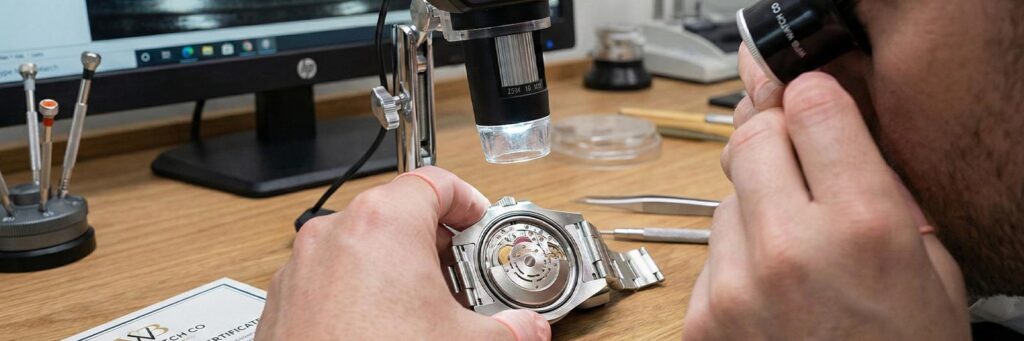
Battery replacement seems simple, but proper handling is essential. Professional watchmakers open cases carefully, check for early signs of corrosion, use quality batteries, and ensure proper sealing when closing the case back.
Every watch has its own requirements. Some need special tools. Others require gasket replacement to maintain water resistance. These details matter. They protect your watch and prevent long-term damage.
Protect Your Watch with Expert Battery Service
Your watch deserves careful, professional attention. At WPB Watch Co., we take battery replacement seriously because we understand how quickly leaks can destroy a movement. Our team inspects every watch thoroughly, explains any concerns we find, and ensures your timepiece receives the battery service it needs to stay safe.
Your watch represents more than timekeeping. It reflects your style, your memories, and your values. We treat every piece with the respect it deserves.
If your watch is due for a battery replacement or shows any signs of a leak, WPB Watch Co. is here to help. Call us at 561-220-9107 or visit wpbwatchco.com to schedule service. Taking action now protects your watch and keeps it running reliably for years to come.
Need Help with Sales or Service?